
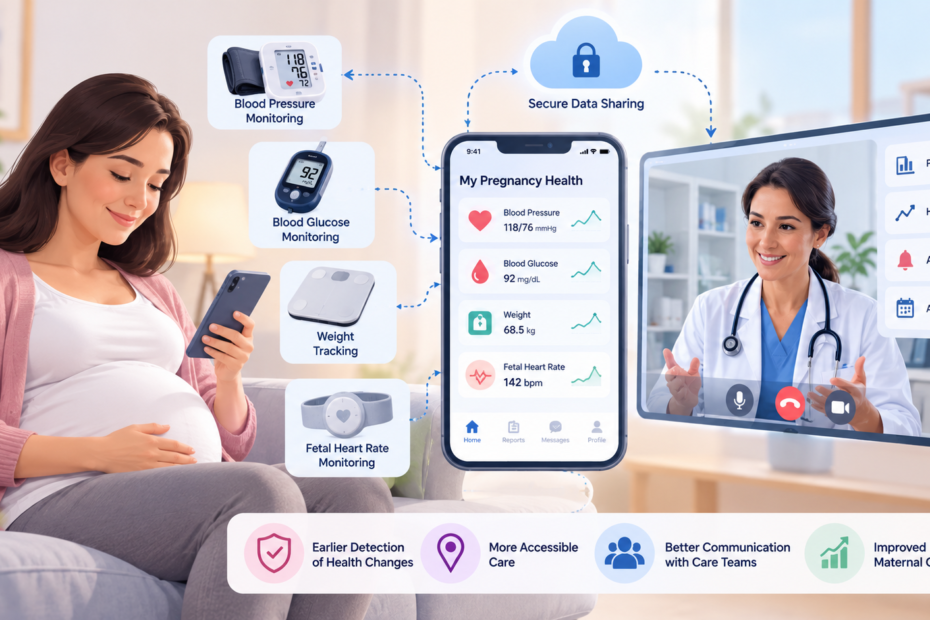
The Role of Remote Patient Monitoring in High-Risk Pregnancy Care
Pregnancy is an exciting journey, but for some women, it comes with additional health concerns that require closer medical attention.
Conditions such as high blood pressure, gestational diabetes, and other pregnancy-related complications may require regular monitoring and frequent communication with healthcare professionals.
But what happens when a patient lives far from a specialist or finds it difficult to visit the hospital regularly?
This is where remote pregnancy monitoring can make a difference.
By connecting suitable medical devices with digital healthcare platforms, remote patient monitoring (RPM) allows healthcare teams to review certain health measurements between appointments.
While it cannot replace in-person pregnancy care, it can provide an additional way to support women managing higher-risk pregnancies.
What Is Remote Pregnancy Monitoring?
Remote pregnancy monitoring uses medical devices and digital platforms to collect selected health information outside a hospital or clinic.
Depending on a patient’s condition and care plan, this may include:
- Blood pressure readings
- Blood glucose measurements
- Weight records
- Patient-reported symptoms
- Other clinician-approved health information
For example, a pregnant woman managing high blood pressure may be advised to use a validated blood pressure monitor at home.
Her readings can be recorded through a mobile app or connected monitoring platform and shared with her healthcare team.
This helps clinicians review information between scheduled appointments and determine whether additional assessment is necessary.
The type and frequency of monitoring should always be decided by a qualified maternity care professional.
1. Supporting Earlier Recognition of Health Changes
In a higher-risk pregnancy, certain health measurements may need closer attention.
For example, women with pregnancy-related hypertension may require regular blood pressure monitoring.
A connected system can help record readings and flag values that fall outside clinician-defined limits.
If a measurement raises concern, the healthcare team can review it and determine the appropriate next step.
This may help identify changes between appointments, but alerts are only useful when someone is responsible for reviewing them.
Remote monitoring supports clinical awareness. It does not diagnose pregnancy complications or replace urgent medical assessment.
2. Making Care More Accessible
Women living in rural or remote areas may have limited access to maternity specialists.
Travelling to a healthcare facility can be difficult, especially when frequent follow-up appointments are required.
Remote patient monitoring can support care between necessary in-person visits.
For example, a patient living several hours away from a specialist clinic may be able to share approved blood pressure measurements from home.
Her healthcare provider can review those readings and arrange further assessment when needed.
This approach may reduce unnecessary travel while maintaining appropriate medical supervision.
However, ultrasound scans, laboratory tests, physical examinations, and urgent assessments must still take place when clinically required.
3. Improving Communication Between Patients and Care Teams
Managing a high-risk pregnancy often involves obstetricians, nurses, specialists, and other healthcare professionals.
Keeping everyone informed can be challenging when information is spread across different systems.
Digital maternal healthcare platforms can organize monitoring records, appointment details, and patient communication.
For example, a nurse reviewing a patient’s blood pressure history may identify readings that need the attention of an obstetrician.
A connected platform can support a structured follow-up process rather than relying entirely on phone calls and manual records.
Clear communication can help patients understand what information to record and when to contact their healthcare team.
4. Supporting Gestational Diabetes Management
Gestational diabetes requires careful management during pregnancy.
Depending on individual medical needs, patients may be asked to check blood glucose levels and maintain records for their healthcare professionals.
Remote monitoring platforms can help organize these readings and make them available for review.
For example, a patient may record blood glucose measurements using an approved device.
Her care team can review the information during follow-up appointments or through an established remote care process.
This may make ongoing monitoring easier to manage.
However, treatment decisions, medication changes, and dietary recommendations should remain under professional medical supervision.
5. Reducing Administrative Work for Healthcare Providers
Remote pregnancy monitoring is not only about collecting health measurements.
Healthcare organizations also need systems for reviewing data, managing alerts, scheduling follow-ups, and documenting care.
Without connected workflows, clinicians may receive information through separate apps, emails, and spreadsheets.
A well-designed remote monitoring platform can help by providing:
- Centralized patient monitoring records
- Clinician-defined alert workflows
- Secure patient-provider communication
- Appointment and follow-up management
- Integration with electronic health records
- Controlled access to sensitive information
These capabilities can reduce repeated administrative steps and make monitoring activities easier to coordinate.
For healthcare organizations, successful implementation depends on reliable devices, clear clinical responsibilities, and secure data exchange.
6. What Should Healthcare Providers Consider Before Adopting RPM?
Introducing remote pregnancy monitoring requires careful planning.
Healthcare providers should consider whether the technology is appropriate for the patient’s condition and whether the monitoring process can be supported safely.
Important requirements include accurate medical devices, patient training, secure health information management, and clear clinical escalation procedures.
Patients should also understand when to seek urgent medical attention rather than wait for someone to review an app notification.
For example, symptoms suggesting preeclampsia, reduced fetal movement, or signs of early labour require prompt professional assessment according to the patient’s care instructions.
Technology should complement established maternity care, not create a false sense of security.
The Future of Remote Pregnancy Monitoring
Remote monitoring technology offers opportunities to make maternal care more connected and accessible.
As healthcare platforms become better integrated, clinical teams may be able to organize monitoring information, support follow-up workflows, and communicate more effectively with patients.
Technology partners such as Ditstek Innovations can support healthcare organizations through connected platform engineering, healthcare interoperability, secure data integration, and workflow modernization.
The objective should be to develop systems that fit real maternity care processes and meet appropriate clinical and privacy requirements.
Conclusion
High-risk pregnancy care requires timely information, professional medical guidance, and careful coordination.
Remote pregnancy monitoring can support these needs by helping patients share selected health measurements and allowing care teams to review information between appointments.