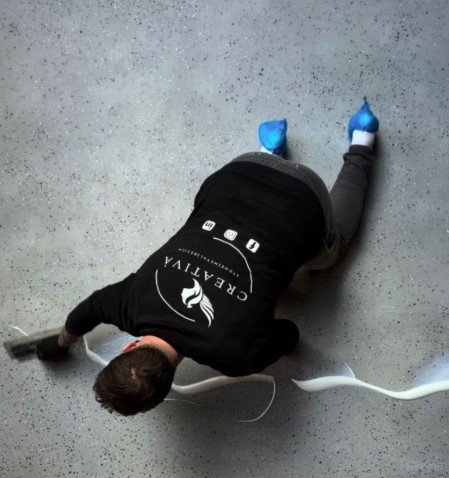

Microcement has become one of the most requested finishes in modern interior renovation — and it’s not difficult to see why.
It offers clean lines, seamless surfaces and a softer alternative to highly polished stone or tile. Kitchens feel more contemporary with it. Bathrooms appear calmer. Smaller rooms often benefit from the visual continuity it creates across floors and walls.
Over the last few years, the material has shifted from niche architectural projects into mainstream residential design across the UK.
But there’s a side to the trend that often gets overlooked.
Microcement may look minimal and understated once finished, yet applying it properly is anything but simple. Behind those smooth surfaces sits a surprisingly technical process, which explains why experienced microcement specialists are becoming increasingly sought after.
For homeowners planning renovations, understanding that distinction early can prevent a great deal of frustration later.
Why microcement is harder to install than it appears
Social media has not entirely helped expectations around microcement.
Short videos tend to show dramatic before-and-after transformations condensed into thirty seconds — a dated bathroom becoming a sleek spa-like space almost instantly. What viewers rarely see are the preparation stages, curing times or technical corrections happening off-camera.
That’s where problems usually begin.
Microcement is applied in multiple thin layers, often no more than a few millimetres in total thickness. Because the material itself is relatively fine, every imperfection beneath the surface matters.
Substrate movement, poor adhesion, moisture issues or uneven preparation can all compromise the final result.
And unlike paint, mistakes are difficult to disguise once the finish cures.
A skilled installer understands not only the decorative side of microcement, but also how different surfaces behave underneath it over time. That experience is often what separates durable work from projects that begin cracking or delaminating months later.
What a microcement specialist actually does
Many homeowners assume microcement installation is simply an advanced decorative finish. In reality, specialists spend a significant amount of time managing conditions clients rarely notice.
Preparation tends to dominate the process.
A proper assessment usually involves checking substrate stability, identifying moisture risks, evaluating existing materials and determining whether reinforcement systems are required. In older British properties especially, walls and floors are rarely as straightforward as they first appear.
The application itself also demands consistency.
Pressure, timing and trowel movement influence texture and tone throughout the surface. Two installers using identical products can produce noticeably different finishes depending on technique and experience.
Then there’s sealing.
Sealers affect durability, stain resistance and appearance. Applying them incorrectly can alter colour balance or leave surfaces vulnerable in wet areas such as bathrooms and kitchens.
This is why many reputable installers position themselves as microcement specialists rather than general decorators offering an additional service.
The material rewards precision.
The risks of inexperienced application
One reason specialist demand has grown is because poor microcement work can be expensive to rectify.
Hairline cracking is among the most common complaints, often linked to substrate movement or insufficient preparation. Discolouration and patchiness can occur too, particularly where application consistency varies across larger surfaces.
Water ingress presents another risk in wet rooms.
Microcement itself is not automatically waterproof simply because it appears seamless. Waterproofing systems beneath the finish still matter enormously, especially around showers and high-moisture environments.
Some homeowners also underestimate how visible imperfections become within minimalist surfaces. Uneven transitions, poor edge detailing or inconsistent texture stand out quickly once natural light hits the room.
Experienced specialists anticipate these issues before installation begins rather than reacting once problems appear.
That foresight usually comes from repetition — handling hundreds of square metres across varying conditions rather than occasional decorative projects.
Why preparation matters more than aesthetics
Interestingly, many of the best microcement projects receive compliments for reasons people struggle to articulate.
Rooms feel balanced. Surfaces appear calm. Light behaves softly across walls and floors.
What viewers rarely appreciate is how much technical preparation sits beneath that simplicity.
Good specialists often spend more time preparing substrates than applying finish coats themselves. Levelling, reinforcing and stabilising surfaces may not sound glamorous, but they largely determine whether a project succeeds long-term.
This becomes particularly important in British housing stock, where older buildings naturally shift and settle over time.
A visually beautiful finish means little if movement cracks begin appearing after a single winter season.
The most experienced installers understand that restraint is part of quality too. Overworked surfaces or excessive texture can undermine the understated aesthetic many clients originally wanted.
Sometimes the best work is almost quiet.
The growing role of microcement specialist services in British interiors
The rise in demand for microcement specialists reflects broader changes in British interior design.
Clients increasingly favour materials that feel tactile and architectural rather than overtly decorative. Seamless finishes fit naturally into that direction, especially in homes aiming for a softer contemporary style.
Bathrooms are perhaps the clearest example.
Traditional tiled layouts still dominate much of the market, though many homeowners now prefer fewer grout lines and more visually continuous surfaces. Microcement offers that without appearing clinical when applied thoughtfully.
Commercial spaces have embraced it too.
Restaurants, boutique retail environments and wellness studios often use microcement to create interiors that feel modern yet relaxed. The finish photographs well, but more importantly, it creates atmosphere without relying heavily on visual clutter.
As demand has expanded, specialist installation has become more important simply because expectations are higher now than they were a few years ago.
For readers researching experienced UK installers and contemporary applications, some design professionals have highlighted the work showcased by <a href=”https://www.creativaltd.com/microcement/”>specialist microcement teams at Creativa</a> as an example of how decorative finishes are increasingly being integrated into broader interior architecture rather than treated as standalone surface upgrades.
How to choose the right microcement specialist
Finding the right installer often matters more than choosing the product brand itself.
Portfolios are a good starting point, though close attention should be paid to consistency rather than dramatic styling. Strong specialists usually show restraint, clean detailing and varied real-world projects rather than heavily filtered showroom imagery alone.
A few practical questions are worth asking too:
- How much preparation work is included?
- What substrates are suitable?
- Which waterproofing systems are used in wet areas?
- What aftercare is recommended?
- How long has the installer worked specifically with microcement?
Experience tends to reveal itself quite quickly in conversation.
Specialists who discuss limitations openly are often more trustworthy than those presenting microcement as universally problem-free.
No material is perfect for every environment.
Common misconceptions homeowners still have
One misconception is that microcement automatically creates a completely flawless surface.
In reality, slight movement, tonal variation and natural texture form part of the material’s character. High-quality work feels controlled rather than machine-perfect.
Another misunderstanding is around maintenance.
Microcement is durable, though not indestructible. Like timber floors or natural stone, it benefits from sensible care rather than harsh chemical cleaning.
There’s also the assumption that thinner materials are inherently less robust. Properly installed microcement systems can perform extremely well precisely because they bond closely to stable substrates while maintaining flexibility.
Still, success depends heavily on installation quality.
That point keeps resurfacing throughout almost every conversation with experienced professionals in the sector.
Is microcement worth the investment?
For many homeowners, yes — particularly when the finish aligns with the overall architectural direction of a property.
Microcement is rarely the cheapest route, nor should it be approached purely as a trend-led surface upgrade. The strongest projects treat it as part of the wider design language of a home rather than an isolated feature.
When installed properly, it creates continuity and texture that standard paint or tile systems struggle to replicate.
The key word there is properly.
And that brings the conversation back to the value of working with an experienced microcement specialist from the outset rather than treating the material as a straightforward DIY-friendly decorative coating.
Final thoughts
The growing popularity of microcement has brought impressive design possibilities into mainstream British interiors. It has also highlighted the importance of craftsmanship in an industry increasingly shaped by visual trends and fast-moving online inspiration.
A skilled microcement specialist does far more than apply decorative layers. They manage preparation, movement, moisture, texture and durability in ways most clients never fully see.
That invisible expertise is often what determines whether a project still looks exceptional years later.
And with materials as technically sensitive as microcement, experience tends to show — quietly, but unmistakably.
FAQ Section
What does a microcement specialist do?
A microcement specialist prepares surfaces, applies layered microcement systems and manages sealing, waterproofing and finishing to ensure durability and visual consistency.
Is microcement suitable for bathrooms?
Yes, when installed correctly with proper waterproofing systems. Experienced specialists are particularly important in wet areas.
Does microcement crack easily?
Not necessarily. Cracking usually results from substrate movement, poor preparation or incorrect installation methods rather than the material itself.
How long does microcement last?
Properly installed and maintained microcement can last for many years in residential and commercial environments.
Can microcement be applied over tiles?
In many cases, yes. One advantage of microcement is that it can often be applied over existing stable surfaces, reducing the need for full removal work.