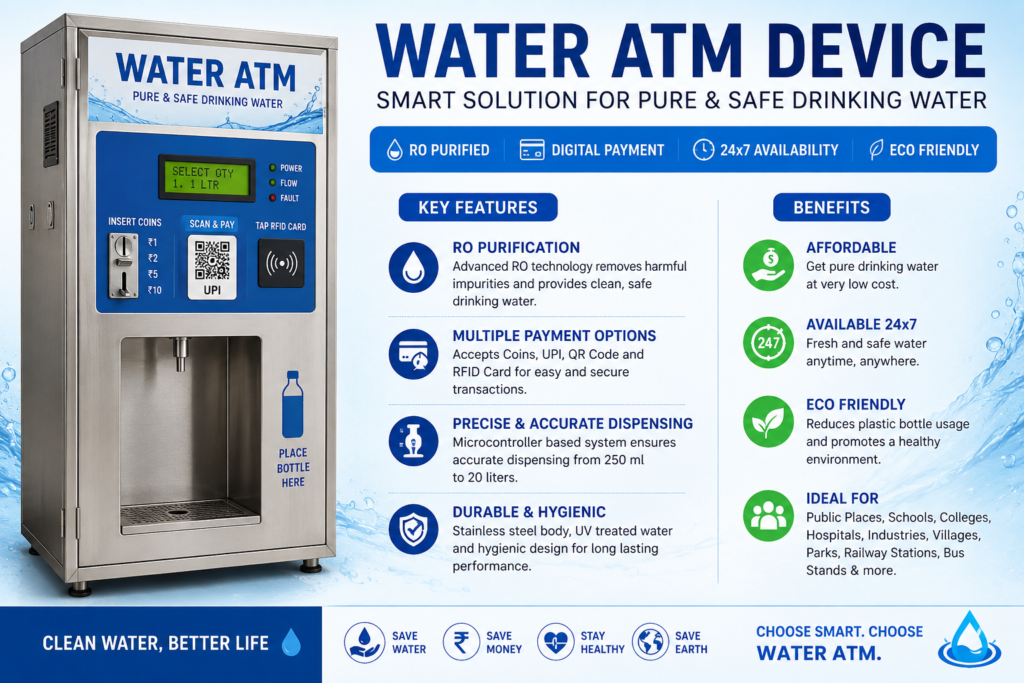

India is witnessing a major transformation in the way clean drinking water is delivered to the public. With increasing awareness about health, rising demand for purified water, and the need to reduce plastic waste, Water ATM Devices have emerged as one of the most practical and profitable solutions for communities and businesses alike.
A Water ATM is more than just a water dispensing machine—it is a smart business model that combines RO water purification, digital payments, automation, and public convenience. From villages and schools to metro stations and factories, these systems are creating a reliable source of safe drinking water while generating sustainable income for operators.
In this guest post, we’ll explore how Water ATM devices are changing India’s drinking water landscape, why they’re an excellent investment opportunity, and what makes them essential for the future of smart water infrastructure.
Understanding the Water ATM Concept
A Water ATM Device is an automated machine that dispenses purified drinking water after receiving payment through coins, UPI, QR codes, RFID cards, or prepaid wallets. The machine is connected to a commercial RO purification system that treats raw water and stores it hygienically before dispensing.
Unlike bottled water businesses, Water ATMs promote refill culture, allowing users to fill their own bottles at a nominal cost. This not only saves money but also significantly reduces environmental pollution caused by plastic bottles.
The concept is especially valuable in regions where access to safe drinking water is limited but the demand is consistently high.
Why India Needs Water ATM Devices
India’s water challenges are unique. While many cities have water supply networks, the quality of drinking water often varies. Rural areas frequently depend on borewells with high TDS levels, while public places struggle to provide hygienic drinking water to thousands of visitors every day.
Water ATMs solve several problems simultaneously:
-
Safe RO purified water
-
Affordable pricing
-
24×7 accessibility
-
Minimal manpower
-
Digital payment convenience
-
Environmentally friendly water distribution
This makes them ideal for both government welfare projects and private enterprises.
The Growing Demand for Public Drinking Water
Urbanization and population growth have increased footfall in public locations such as:
-
Railway stations
-
Bus terminals
-
Tourist destinations
-
Hospitals
-
Educational campuses
-
Industrial zones
In these places, people require immediate access to drinking water. Installing multiple water coolers often results in maintenance issues, whereas a Water ATM provides controlled, measurable, and automated dispensing with better hygiene standards.
The growing popularity of UPI payments has further accelerated adoption by making transactions effortless.
How a Water ATM Creates Value
The success of a Water ATM lies in its ability to benefit everyone involved.
For Consumers
-
Affordable drinking water
-
Better hygiene
-
Cashless convenience
-
Reusable bottle support
For Operators
-
Automated revenue collection
-
Low staffing requirement
-
Digital sales tracking
-
High daily usage potential
For Society
-
Reduced plastic pollution
-
Improved public health
-
Sustainable infrastructure
-
Better access to clean water
This three-way value creation is what makes Water ATM projects highly impactful.
Business Models for Water ATM Projects
One of the strongest advantages of Water ATM devices is their flexibility. Different organizations can adopt different operating models depending on their objectives.
1. Community Water Model
Villages and panchayats install a Water ATM for local residents. Users pay a small amount per litre, making the project self-sustaining.
2. Institutional Model
Schools, colleges, and factories provide RFID access to students or employees, ensuring controlled water distribution without cash handling.
3. Commercial Refill Model
Shopping complexes, transport hubs, and tourist places install Water ATMs where visitors purchase purified water instantly using QR codes.
4. CSR Water Projects
Corporate organizations sponsor Water ATM installations in underserved communities as part of their Corporate Social Responsibility initiatives.
Each model serves a different audience while promoting safe drinking water.
Features That Increase Customer Trust
A successful Water ATM should inspire confidence among users. Modern machines include several features that improve transparency and user experience.
Essential Features
-
Digital litre display
-
Stainless steel dispensing area
-
RO + UV purification
-
QR and UPI payment
-
Coin acceptor
-
RFID compatibility
-
Leak-proof dispensing
-
Water quality monitoring
-
Low maintenance design
These features make users feel confident about the quality and quantity of water they receive.
Why Refill Stations Are Better Than Bottled Water
Packaged drinking water has become a daily habit, but it also creates enormous environmental costs.
Consider the comparison:
|
Factor |
Water ATM |
Bottled Water |
|---|---|---|
|
Cost |
Low |
High |
|
Plastic Waste |
Minimal |
Very High |
|
Reusable Bottles |
Yes |
No |
|
Fresh Purification |
Yes |
Depends |
|
Community Access |
Excellent |
Limited |
By encouraging refilling instead of purchasing new bottles, Water ATMs contribute directly to sustainable living.
Best Locations for Maximum ROI
Location plays the biggest role in determining the success of a Water ATM business.
High-Demand Installation Areas
-
Railway stations
-
Bus stands
-
Metro stations
-
Government hospitals
-
Schools & colleges
-
Industrial factories
-
Residential societies
-
Village markets
-
Religious places
-
Tourist attractions
These locations experience regular footfall, resulting in consistent daily water demand.
Choosing the Right RO Capacity
Every project has different consumption requirements. Selecting the correct RO capacity prevents both shortages and unnecessary investment.
|
Application |
Suggested Capacity |
|---|---|
|
Small School |
250 LPH |
|
Apartment |
500 LPH |
|
Hospital |
1000 LPH |
|
Factory |
2000 LPH |
|
Village Water Project |
3000 LPH |
|
Public Transport Hub |
5000 LPH |
Capacity planning should always be based on peak-hour usage rather than average daily demand.
Revenue Potential of Water ATM Devices
A Water ATM can become a reliable source of recurring income because water is a necessity rather than a seasonal product.
Common Revenue Streams
-
Pay-per-litre sales
-
Monthly family recharge plans
-
Institutional contracts
-
Corporate employee subscriptions
-
CSR maintenance partnerships
With proper maintenance and a strategic location, operators can build a long-term sustainable business.
Digital Payments Are Changing Everything
India’s digital payment revolution has transformed Water ATM operations. Earlier, coin collection required manual handling and created accounting challenges. Today, QR-enabled Water ATMs offer:
-
Instant UPI payments
-
Automatic transaction records
-
Better transparency
-
Reduced cash theft risk
-
Easier business reporting
For operators, this means improved financial management with minimal effort.
Water Quality Builds Customer Loyalty
People return to refill stations only when they trust the water quality. Maintaining consistent purification standards is therefore essential.
Regular Quality Checks Should Include
-
TDS testing
-
pH monitoring
-
RO membrane performance
-
UV functionality
-
Storage tank sanitization
-
Dispensing nozzle hygiene
A well-maintained machine not only protects public health but also strengthens customer confidence.
Maintenance: The Secret to Long-Term Success
Many Water ATM projects fail not because of poor technology, but because of irregular maintenance.
Recommended Schedule
Daily
-
Clean dispensing area
-
Check water flow
-
Inspect payment system
Weekly
-
Sanitize external surfaces
-
Check filter condition
-
Inspect valves
Monthly
-
Measure TDS
-
Check pump pressure
-
Test electronic controller
Annually
-
Replace RO membrane if required
-
Service motors and pumps
-
Calibrate dispensing sensors
Preventive maintenance reduces downtime and increases equipment lifespan.
Environmental Impact That Goes Beyond Plastic
Water ATM devices contribute to sustainability in multiple ways.
Environmental Benefits
-
Fewer plastic bottles entering landfills
-
Lower transportation emissions
-
Reduced packaging waste
-
Promotion of reusable containers
-
Efficient water resource management
A single busy Water ATM can prevent thousands of disposable bottles from being used each month.
Future Trends in Water ATM Technology
The next generation of Water ATM devices is becoming smarter through IoT and automation.
Emerging Innovations
-
Remote cloud monitoring
-
Live TDS display
-
Mobile app management
-
Digital maintenance alerts
-
Solar-powered systems
-
Touch-free dispensing
-
AI-based fault detection
These advancements will make public drinking water systems more efficient and easier to operate remotely.
Why Entrepreneurs Should Invest Now
The demand for purified drinking water continues to rise across residential, commercial, and public sectors. Government initiatives promoting clean water, combined with India’s digital payment ecosystem, have created the perfect environment for Water ATM businesses.
Unlike many retail businesses, water serves an essential daily need, making demand relatively stable throughout the year. With the right location, reliable equipment, and regular maintenance, a Water ATM can generate both social impact and long-term business value.
Conclusion
The Water ATM Device represents the future of accessible, affordable, and sustainable drinking water in India. It bridges the gap between advanced RO purification and public convenience by combining smart technology with hygienic water dispensing.
Whether installed in villages, schools, hospitals, factories, or smart cities, Water ATMs improve public health, reduce plastic waste, encourage refill culture, and create sustainable revenue opportunities. As India continues investing in clean water infrastructure, businesses and institutions adopting Water ATM technology today will be contributing to a healthier and more environmentally responsible future.