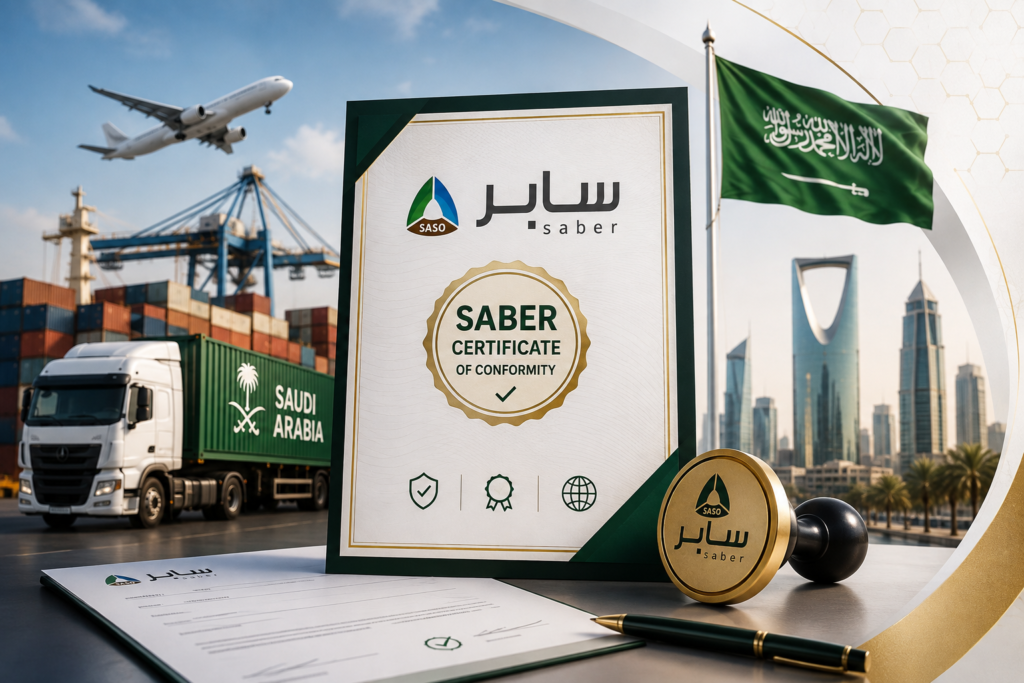

For businesses importing regulated products into Saudi Arabia, completing SABER registration is an important part of meeting the Kingdom’s product conformity requirements. The SABER platform helps importers and manufacturers manage product conformity procedures electronically and obtain the certificates needed for applicable products. Understanding how the platform works can help businesses prepare their documents correctly, avoid unnecessary delays, and make the import process smoother.
Whether you are a Saudi importer, overseas manufacturer, or exporter supplying products to the Saudi market, knowing the product registration process is essential before your shipment arrives.
What Is the SABER Platform?
SABER is an online conformity assessment platform used for products entering the Saudi Arabian market. It is associated with the Saudi Standards, Metrology and Quality Organization (SASO) and allows businesses to manage product conformity and shipment certification procedures electronically.
The platform is designed to streamline the compliance process by connecting importers, manufacturers, conformity assessment bodies, and relevant regulatory processes in one digital environment.
Depending on the product and applicable technical regulations, businesses may need to register products and obtain the appropriate conformity documentation before importing them into Saudi Arabia.
Why Is SABER Registration Important?
Product compliance is an essential part of importing goods into Saudi Arabia. Completing the required registration and certification procedures can help ensure that products meet applicable Saudi standards and technical regulations.
Some key benefits include:
- Supporting regulatory compliance
- Reducing customs clearance delays
- Providing access to required conformity procedures
- Improving documentation accuracy
- Helping importers prepare shipments before arrival
- Making certification procedures more organized
- Supporting smoother product entry into the Saudi market
For regulated products, failing to complete the applicable requirements may result in shipment delays or difficulties during customs clearance.
Who Needs to Use SABER?
The SABER system is primarily relevant to businesses involved in importing or manufacturing products covered by Saudi technical regulations.
This can include:
- Saudi importers
- Manufacturers
- Overseas exporters
- Distributors
- Suppliers
- Businesses importing regulated consumer and industrial products
The exact requirements depend on the type of product, its intended use, and the applicable Saudi technical regulation.
Step-by-Step SABER Product Registration Process
Step 1: Create or Access Your SABER Account
The first step is to access the SABER platform and create an account if you do not already have one.
The importer generally needs to provide the required business and contact information during account setup. Existing users can log in to their account and begin managing product-related procedures.
Make sure the information entered into the account is accurate because it may be used throughout the conformity assessment and shipment certification process.
Step 2: Add the Product
After accessing the platform, the importer can proceed with adding the product that will be imported into Saudi Arabia.
Product information should be entered carefully. Depending on the product category, this may include:
- Product name
- Brand
- Model or reference number
- Manufacturer information
- Country of origin
- Product category
- HS code
- Technical information
Accurate product information is important because the applicable conformity requirements can depend on the product classification.
Step 3: Select the Correct Product Category
One of the most important stages is identifying the correct product category and applicable technical regulation.
Different products may be subject to different Saudi standards and conformity requirements. Therefore, importers should verify the applicable requirements before submitting the product information.
Incorrect classification can lead to additional documentation requests, delays, or the need to correct the registration.
Step 4: Select a Conformity Assessment Body
For products requiring conformity assessment, the importer may need to select an approved conformity assessment body through the SABER platform.
The conformity assessment body reviews the product documentation and determines whether the product meets the relevant technical requirements.
Depending on the product, the assessment may involve reviewing technical files, test reports, certificates, product information, or other supporting documentation.
Step 5: Submit the Required Documents
The next stage involves providing the documents required for the applicable conformity assessment.
Common documents may include:
- Commercial registration information
- Product specifications
- Manufacturer details
- Test reports
- Technical documentation
- Product photographs
- Existing certificates
- Product labels
- Relevant conformity documents
The exact documents can vary depending on the product and applicable regulation.
Before submission, check that the information across all documents is consistent. Differences in product names, model numbers, manufacturer details, or other important information can result in additional verification.
Step 6: Complete Product Conformity Assessment
After the required documents have been submitted, the selected conformity assessment body reviews them.
The assessment may include document verification and, depending on the product, testing or other conformity procedures.
If additional information is requested, the importer should provide it promptly. Completing the assessment successfully allows the applicable product conformity certificate to be issued.
Product Certificate and Shipment Certificate
It is important to understand that product conformity and shipment certification are related but distinct stages.
A Product Certificate of Conformity (PCoC) demonstrates that the product complies with applicable technical requirements. Once the product has been approved, the importer may need a Shipment Certificate of Conformity (SCoC) for individual shipments.
The shipment certificate is associated with the specific imported consignment and may be required for customs clearance.
Therefore, completing product registration alone does not necessarily mean every future shipment is automatically cleared. Importers should check the requirements applicable to each shipment.
Step 7: Apply for the Shipment Certificate
After the product conformity requirements have been completed, the importer can proceed with the shipment certification process when required.
The shipment details may include:
- Invoice information
- Product details
- Quantity
- Shipment value
- Importer information
- Exporter or manufacturer information
- Shipping details
The shipment information should match the supporting documents to prevent unnecessary delays.
Step 8: Complete Customs Clearance
Once the applicable SABER requirements and shipment documentation have been completed, the importer can proceed with the customs clearance process.
Customs authorities may verify the shipment documentation and regulatory compliance before releasing the goods.
This is why it is recommended to complete relevant product compliance procedures before the shipment reaches the Saudi port, airport, or land border.
Documents You Should Prepare Before SABER Registration
Preparing documentation in advance can make the registration process easier. Depending on the product, businesses may need:
Product Information
Provide accurate product names, model numbers, descriptions, specifications, and manufacturer details.
Technical Documents
Technical specifications and product documentation may be needed to demonstrate compliance with applicable requirements.
Test Reports
Certain regulated products may require laboratory test reports from recognized facilities.
Commercial Documents
Invoices and other commercial documents may be required during the import and certification process.
Product Labels
Labels and markings should comply with the applicable Saudi requirements.
Manufacturer Information
Details about the manufacturer and country of origin should be accurate and consistent across the documentation.
Common SABER Registration Mistakes
Businesses can experience delays when basic information is incorrect or incomplete. Some common mistakes include:
Using an incorrect HS code: Product classification affects regulatory requirements and customs treatment.
Submitting incomplete documents: Missing technical or commercial documents can delay assessment.
Incorrect product information: Model numbers, brands, or product descriptions should match across documents.
Waiting until shipment arrival: Starting compliance procedures too late can create unnecessary pressure during customs clearance.
Ignoring product-specific regulations: Different product categories may have different conformity requirements.
Failing to coordinate with suppliers: Importers should ensure that manufacturers and exporters provide the correct technical documentation.
How Long Does SABER Registration Take?
There is no single processing time for every product. The timeframe depends on the product category, documentation, applicable technical regulations, conformity assessment requirements, and whether testing or additional verification is necessary.
Simple products with complete documentation may move through the process more efficiently, while regulated products requiring additional assessment can take longer.
Preparing the required documents in advance is one of the best ways to minimize avoidable delays.
How Much Does SABER Registration Cost?
The cost of product certification and related procedures can vary depending on several factors, including the product category, conformity assessment requirements, testing requirements, and certification body involved.
Importers should consider not only the platform-related charges but also possible conformity assessment, laboratory testing, documentation, and other service costs.
For an accurate estimate, businesses should evaluate their specific product and applicable regulatory requirements.
Tips for Smooth SABER Registration
To make the process easier, importers should:
- Identify applicable technical regulations before importing.
- Confirm the correct HS code.
- Prepare product and technical documents in advance.
- Make sure all information is consistent.
- Check product labeling requirements.
- Work with an approved conformity assessment body when required.
- Start the process before the shipment arrives.
- Keep copies of certificates and supporting documents.
- Coordinate closely with manufacturers and exporters.
- Use professional compliance or customs support when the process is complex.
Conclusion
Registering a product through the SABER platform is an important part of the Saudi product conformity process for applicable imports. From creating an account and adding product information to selecting a conformity assessment body, submitting documents, obtaining the required product certificate, and completing shipment certification, each stage needs careful attention.
Successful SABER registration depends largely on accurate product information, complete documentation, correct classification, and compliance with applicable Saudi technical regulations. Starting the process early can help businesses avoid unnecessary delays and prepare their shipments for customs clearance.
For importers unfamiliar with Saudi conformity requirements, professional customs clearance and compliance support can make the process more manageable. With proper preparation, businesses can complete the required procedures efficiently and bring compliant products into the Saudi market with greater confidence.