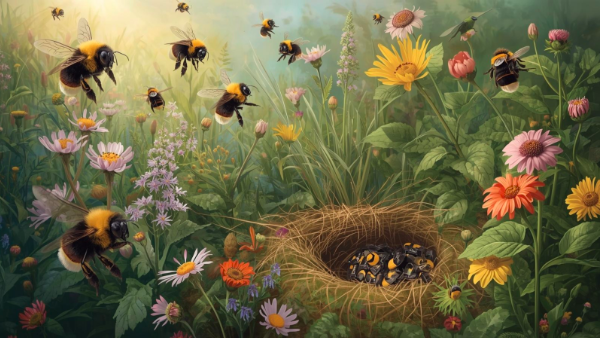

Bumblebees are fascinating insects that play a crucial role in pollination and maintaining biodiversity. Their fuzzy appearance, slow flight, and gentle buzzing make them easy to recognize, but their behavior is more complex than it seems. Understanding bumblebee aggression, their life cycle, and seasonal habits helps gardeners, nature enthusiasts, and researchers coexist safely with these important pollinators.
In this article, we’ll explore bumblebee behavior, nesting habits, daily routines, and how their life cycle influences their actions.
Bumblebee Behavior Patterns
Bumblebees are generally calm insects, but like all creatures, they have specific behaviors that help them survive.
1. Foraging Behavior
Bumblebees spend a significant portion of their day collecting nectar and pollen from flowers. They are efficient pollinators, visiting hundreds of flowers in a single day. Foraging behavior includes:
- Flower selection: Bumblebees prefer flowers with deep corollas, as their long tongues can reach nectar.
- Pollen collection: They use specialized hairs on their legs to gather pollen, which they carry back to the nest.
- Buzz pollination: Bumblebees vibrate their bodies to release pollen from certain flowers, a technique not all pollinators can perform.
Understanding their foraging behavior helps humans avoid disturbing bees while they feed.
2. Bumblebee Aggression
Bumblebees are rarely aggressive. They sting or bite only under certain conditions:
- Nest defense: Worker bees protect their queen and larvae.
- Threatened individual: If a bee is trapped, squished, or handled roughly, it may sting.
- Disturbance: Sudden movements or loud noises near their nest can provoke defensive behavior.
Recognizing these triggers allows people to respect bumblebees’ space and avoid unnecessary stings.
3. Communication
Bumblebees communicate using body movements, buzzing sounds, and pheromones. For example:
- Buzzing: Signals alertness or warning.
- Pheromones: Help coordinate activities within the colony, like foraging or defending the nest.
- Body movements: Indicate aggression or readiness to defend the nest.
These communication methods ensure the colony functions efficiently and safely.
Bumblebee Nesting Habits
Bumblebee nests are central to understanding their daily life and seasonal behavior. Unlike honeybees, bumblebees have small, ground-based colonies.
1. Nest Locations
Bumblebee nests are usually hidden and well-protected. Common nesting sites include:
- Underground burrows, often abandoned rodent holes
- Dense grass or garden hedge
- Piles of leaves or compost heaps
These hidden locations reduce the risk of predators and human disturbances.
2. Nest Structure
Bumblebee nests are smaller than honeybee hives but highly organized:
- Queen chamber: The queen resides here and lays eggs.
- Worker chambers: Cells contain larvae and food stores.
- Pollen and nectar storage: Food supplies are kept near developing larvae for easy access.
Understanding nest structure helps explain why bees defend their nests and why aggression increases near these areas.
3. Seasonal Nesting Behavior
Bumblebee activity changes with the seasons:
- Spring: Queens emerge from hibernation and search for suitable nesting sites.
- Summer: Worker bees expand the colony, forage for food, and care for the young.
- Fall: New queens and males are produced, mating occurs, and worker bees die off.
- Winter: Only the mated queens survive, hibernating until spring to start new colonies.
Seasonal behavior influences bumblebee aggression—colonies are more protective during peak summer activity.
Bumblebee Life Cycle
Understanding the bumblebee life cycle helps explain their behavior patterns and colony dynamics. The life cycle includes:
1. Egg Stage
- The queen lays eggs in individual cells inside the nest.
- Eggs hatch within a few days, depending on temperature and species.
2. Larva Stage
- Larvae are fed pollen and nectar by worker bees.
- This stage lasts around 10–14 days.
3. Pupa Stage
- Larvae spin cocoons and enter the pupal stage, transforming into adult bees.
- The pupal stage lasts 2–3 weeks, after which adult bees emerge.
4. Adult Stage
- Adults include queens, workers, and males.
- Workers maintain the nest, forage for food, and defend the colony.
- Males leave the nest to mate, and new queens start the cycle again next year.
This life cycle explains why bumblebee colonies expand in summer and why activity declines in fall.
Daily Bumblebee Activities
Bumblebees have structured routines that support the colony:
- Morning: Workers forage early for nectar and pollen.
- Afternoon: Food is stored in the nest, and larvae are fed.
- Evening: Bees return to the nest and rest.
Weather conditions affect daily activity—bumblebees can fly in cooler temperatures than many other bees, making them effective early-season pollinators.
How to Coexist Safely with Bumblebees
Understanding bumblebee behavior helps humans avoid stings and coexist safely:
- Observe from a distance: Avoid disturbing bees while foraging.
- Avoid nests: Recognize nesting sites and stay clear.
- Stay calm: Sudden movements can provoke defensive stings.
- Protective clothing: Long sleeves and gloves help when gardening near bees.
- Respect their space: Bumblebees are gentle when left alone.
By following these tips, you can safely enjoy observing these important pollinators.
Interesting Bumblebee Facts
- Bumblebees are capable of “buzz pollination,” which is essential for crops like tomatoes and blueberries.
- They can fly at low temperatures and in light rain, unlike many other insects.
- A single bumblebee can visit hundreds of flowers per day.
- Bumblebee colonies are annual—only new queens survive winter to start new colonies.
These facts highlight the ecological importance of bumblebees and their unique behaviors.
FAQs About Bumblebee Behavior
Q1: Are bumblebees aggressive?
A: Bumblebees are not naturally aggressive. They sting only to protect themselves or their nest.
Q2: How long does a bumblebee colony last?
A: Most colonies last one year. Only new queens survive winter to start new colonies.
Q3: Where do bumblebees build nests?
A: Nests are usually hidden underground, in dense grass, or in compost piles.
Q4: What is the bumblebee life cycle?
A: The cycle includes egg, larva, pupa, and adult stages, lasting several weeks from egg to worker bee.
Q5: How can I avoid being stung?
A: Stay calm, avoid nests, wear protective clothing, and observe bees without disturbing them.
Final Thoughts
Bumblebees are fascinating creatures with complex behaviors and habits. Understanding their bumblebee life cycle, nesting habits, and behavior patterns, including bumblebee aggression, helps us coexist safely and appreciate their ecological importance.
These gentle pollinators rarely sting unless provoked, and most of their behavior is focused on foraging, caring for the young, and maintaining the colony. By observing their habits, respecting their nests, and taking simple precautions outdoors, humans can enjoy gardens, parks, and natural spaces without fear.
Bumblebees are not just insects—they are essential workers in our ecosystem, ensuring that flowers bloom, fruits grow, and our environment thrives.