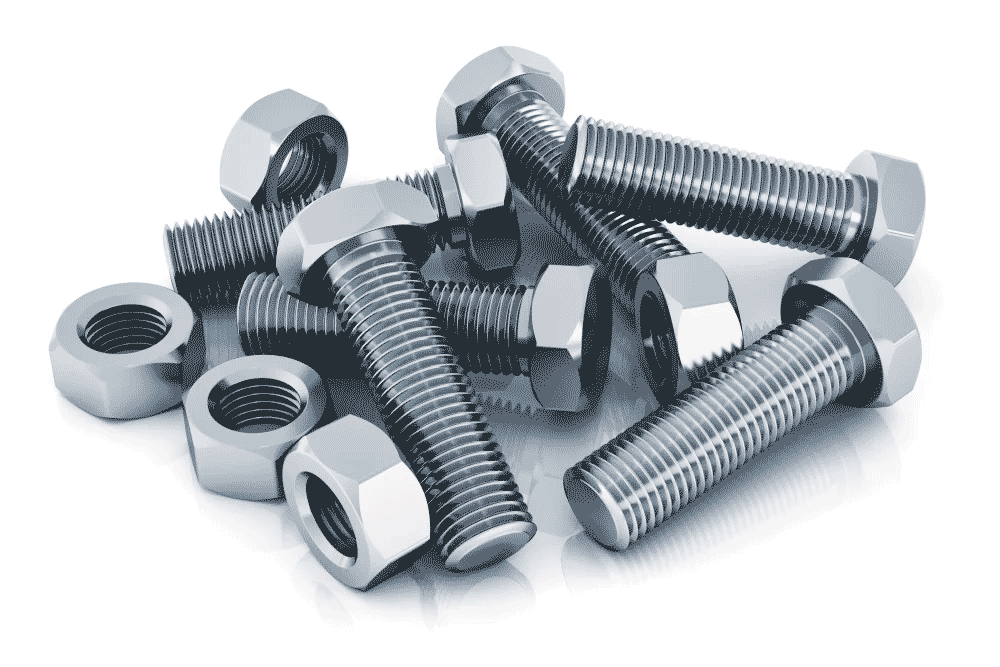

In the demanding world of industrial engineering, the integrity of an assembly often depends on the quality of its smallest components: the fasteners. For high-stress applications, standard carbon steel is insufficient. This is where alloy steel fasteners come into play. Enhanced with elements like chromium, molybdenum, and nickel, these high tensile fasteners offer superior strength, durability, and resistance to fatigue and wear . This guide explores the key alloy steel grades used in high-performance fasteners, providing insights into their properties and applications for engineers, procurement specialists, and builders in the USA, UK, Australia, and Europe.
Understanding Alloy Steel for Fasteners
Alloy steel is defined by the addition of alloying elements beyond carbon and iron. These elements are added to enhance specific properties such as hardenability, strength, toughness, and corrosion resistance . This makes it the material of choice for heavy duty fasteners and components that must withstand extreme mechanical loads and harsh environments. According to the ASTM A354 standard, quenched and tempered alloy steel bolts are specified where high strength is required, underscoring their critical role in modern engineering .
Common Alloy Steel Grades and Their Properties
Several specific alloy steel grades are frequently used by custom fastener manufacturers to produce high-performance components.
AISI 4140
AISI 4140 is a chromium-molybdenum alloy steel known for its excellent strength and toughness. It is often used as a base material for high-strength socket head cap screws and bolts, with the capability to be heat-treated to achieve property class 10.9 or even 12.9 . Its good hardenability makes it suitable for large cross-section parts, and it is frequently specified in military and aerospace standards .
AISI 4340
AISI 4340 is a nickel-chromium-molybdenum alloy steel prized for its deep hardenability and exceptional tensile strength. It is a common material for critical structural fasteners in aerospace and automotive applications, with typical tensile strengths reaching 160-180 ksi . It is a workhorse material for applications demanding the highest level of performance and reliability.
AISI 8740
AISI 8740 is a nickel-chromium-molybdenum low-alloy steel similar to 4140 but with added nickel for improved toughness. It is widely used for aircraft fasteners, engine bolts, and other components requiring high tensile strength, good yield strength, and excellent wear resistance . Its combination of properties makes it a go-to material for a custom bolt manufacturer producing parts for the aerospace sector.
The Role of Alloying Elements
The specific properties of alloy steel fasteners are achieved through the careful combination of alloying elements.
-
Chromium (Cr): Enhances hardenability and provides some resistance to corrosion and oxidation.
-
Molybdenum (Mo): Increases hardenability and high-temperature strength, improving resistance to creep.
-
Nickel (Ni): Improves toughness and impact resistance, especially at low temperatures.
-
Boron (B): A cost-effective way to increase hardenability, often used in automotive fastener steels like 10B21 .
These elements work in concert to create engineered fasteners that can perform reliably in the most challenging conditions.
Applications Across Industries
The choice of alloy steel grade is often determined by the specific demands of the industry and application. Aerospace fasteners manufacturer and automotive fasteners manufacturer rely heavily on these materials .
| Industry | Typical Alloy Grades | Key Requirements |
|---|---|---|
| Aerospace & Defense | AISI 4340, AISI 8740, H-11, Novalloy 280 | Ultra-high strength, fatigue resistance, weight reduction |
| Automotive | Boron steels (10B21, 10B33), AISI 4140, SCM435 | High tensile strength, fatigue resistance, cost-effectiveness |
| Heavy Machinery & Infrastructure | AISI 4140, 6150, Alloy Steel | Extreme strength, wear resistance, resistance to shock loads |
| Oil & Gas, Marine | Inconel, Monel (specialty alloys) | Extreme corrosion resistance, high-temperature stability |
Manufacturing Processes for Alloy Steel Fasteners
Creating high-performance precision fasteners from alloy steel requires advanced manufacturing techniques.
-
Cold Forging and Heading: These processes form the fastener shape at room temperature, which is efficient for mass production and imparts increased strength through work hardening .
-
CNC Machining: For complex or low-volume parts, CNC machined fasteners offer high precision and tight tolerances.
-
Heat Treatment: A critical step for alloy steels to achieve their high strength. Processes like quenching and tempering are used to develop the desired microstructure and mechanical properties .
-
Thread Rolling: Thread rolling is preferred over cutting because it induces compressive residual stresses, significantly improving the fastener’s resistance to fatigue failure .
Standards and Quality Assurance
High-quality alloy steel fasteners are manufactured to meet stringent international standards such as ASTM, ISO, DIN, and BS. For instance, ASTM A354 covers quenched and tempered alloy steel bolts, while DIN and ISO standards specify dimensions and mechanical properties for metric fasteners . A reputable ISO certified fastener manufacturer and ASTM fasteners supplier ensures that their products meet these critical requirements, providing traceability and quality assurance for clients worldwide.
Conclusion
Choosing the right material for high-performance fasteners is a critical engineering decision. Alloy steel grades like 4140, 4340, and 8740 provide the necessary tensile strength, toughness, and fatigue resistance for demanding applications across aerospace, automotive, and heavy infrastructure. The selection process should consider the specific mechanical and environmental demands of the application, ensuring the chosen material and manufacturing process deliver long-term reliability. By partnering with a trusted industrial fastener manufacturer and understanding the nuances of these materials, you can ensure your custom fastening solutions are built to last.
Last Update: August 10, 2026
Tagged in:
aerospace fasteners manufacturer, alloy steel fasteners, anchor bolts manufacturer, anchor fasteners, ANSI fasteners manufacturer, ASTM fasteners, ASTM fasteners supplier, automotive fasteners, automotive fasteners manufacturer, B2B fastener manufacturer, bespoke bolt manufacturer, bespoke fasteners, bolt manufacturer, BS standard fasteners, bulk fastener manufacturer, carbon steel fasteners, carriage bolts, CNC machined fasteners, cold forged fasteners, construction fasteners, construction fasteners supplier, corrosion resistant fasteners, custom bolt manufacturer, custom bolts supplier, custom engineering fasteners, custom fastener company, custom fastener exporter, custom fastener manufacturer, custom fastener manufacturing company, custom fastener supplier, custom fasteners, custom fasteners India, custom fastening products, custom fastening solutions, custom flange bolts, custom hardware manufacturer, custom hex nuts, custom industrial fasteners, custom machine screws, custom metal components, custom metal fasteners, custom nut manufacturer, custom nuts supplier, custom pins manufacturer, custom precision engineering, custom rivets manufacturer, custom screw manufacturer, custom socket screws, custom stainless steel bolts, custom stainless steel nuts, custom threaded fasteners, custom washers manufacturer, DIN fasteners, DIN fasteners manufacturer, engineered fasteners, engineering fasteners, export quality fasteners, eye bolts, eye bolts manufacturer, fastener company, fastener exporter, fastener exporter India, fastener fabrication, fastener manufacturer, fastener manufacturer India, fastener manufacturer Mumbai, fastener manufacturer Navi Mumbai, fastener solutions, fastener supplier, fastener supplier India, fastening solutions, flange bolts, flat washers, forged fasteners manufacturer, foundation bolts manufacturer, heavy duty fasteners, hex bolts, hex bolts manufacturer, high quality fastener manufacturer, high tensile fasteners, hot forged fasteners, industrial bolts and nuts, industrial fastener exporter, industrial fastener manufacturer, industrial fasteners, industrial fastening products, industrial fastening systems, industrial hardware manufacturer, infrastructure fasteners, ISO certified fastener manufacturer, ISO fasteners, J bolt manufacturer, lock nuts, machine screws, made in India fasteners, made to order fasteners, marine grade fasteners, metal fastener manufacturer, metric fasteners, metric fasteners manufacturer, non standard fasteners, nut manufacturer, nyloc nuts, OEM fastener manufacturer, OEM fastener supplier, OEM fasteners, precision fastener manufacturer, precision fasteners, precision fastening solutions, precision industrial fasteners, precision machined fasteners, screw manufacturer, self drilling screws, self tapping screws, socket head bolts, socket head cap screws, special fasteners manufacturer, special purpose fasteners, spring washers, stainless steel fasteners, stud bolts manufacturer, threaded rods, threaded rods manufacturer, U bolt manufacturer, U bolts, washer manufacturer, wholesale fasteners, wing nuts