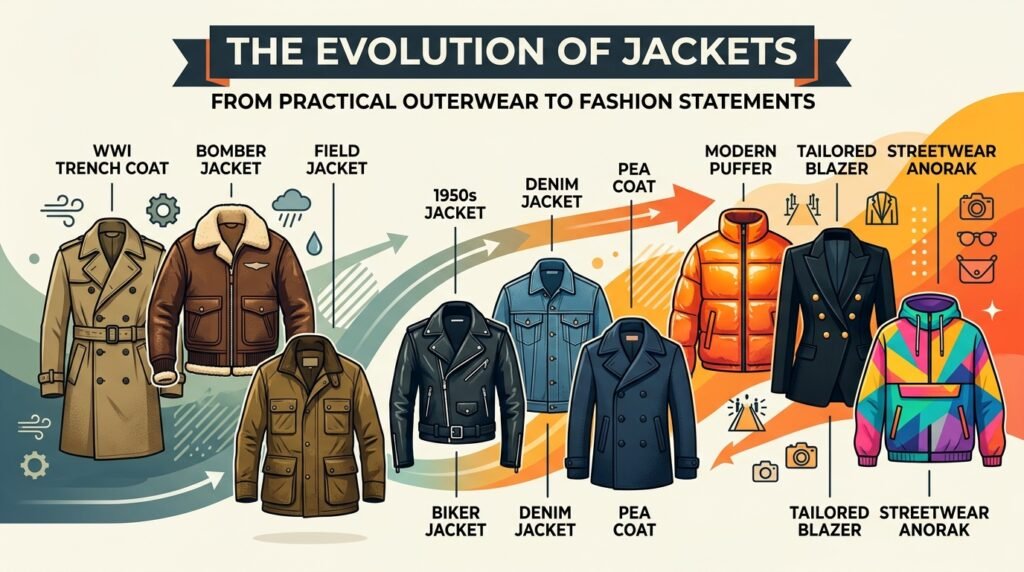

Jackets have come a long way from their original purpose of simply protecting people from cold, wind, and rain. Today, they are among the most expressive pieces in a modern wardrobe, capable of communicating personality, lifestyle, cultural identity, and even social status. From rugged workwear and military uniforms to luxury runway pieces and contemporary streetwear, the jacket has continually adapted to the needs and tastes of each generation.
What makes the evolution of jackets particularly interesting is that functionality has rarely disappeared. Instead, practical features have been refined and transformed into design elements. Durable fabrics, protective collars, adjustable cuffs, insulating linings, and multiple pockets still matter, but today’s consumers also consider silhouette, branding, color, texture, and cultural relevance when choosing outerwear.
Where the Modern Jacket Began
Early forms of jackets were primarily designed around necessity. Workers, soldiers, travelers, and outdoor communities needed garments that could provide protection without severely restricting movement. Heavy wool, leather, canvas, and tightly woven cotton became popular because these materials offered durability and protection against demanding conditions.
Military clothing played a particularly influential role in jacket development. Military garments had to balance mobility, weather resistance, storage, and durability. Features such as reinforced seams, utility pockets, sturdy fasteners, and structured shoulders eventually moved beyond uniforms and into civilian fashion.
Workwear created another important foundation. Mechanics, railroad workers, farmers, and other laborers needed outerwear capable of surviving repetitive physical activity. Their practical garments established the visual language of rugged jackets that continues to influence contemporary collections.
Industrial Innovation Changed Outerwear
The evolution of jackets accelerated as textile technology improved. Manufacturers gained access to lighter synthetic fibers, improved insulation, water-resistant finishes, and stronger fasteners. These developments made it possible to create jackets that offered substantial protection without the weight associated with traditional materials.
The rise of synthetic fabrics was particularly significant. Materials such as nylon and polyester allowed designers to experiment with lightweight shells, technical sportswear, and weather-resistant construction. Jackets could now be designed for highly specific environments, from mountain trails to urban commutes.
At the same time, manufacturing improvements made fashionable outerwear more accessible. Mass production allowed popular silhouettes to move quickly from specialist clothing into mainstream wardrobes. As a result, the jacket stopped being exclusively a seasonal necessity and increasingly became a central part of everyday style.
Jackets Become Symbols of Youth Culture
During the twentieth century, jackets became closely associated with music, cinema, and youth movements. The leather jacket, for example, developed a rebellious image through motorcycle culture and Hollywood. Its tough construction was practical, but its cultural meaning became equally important.
Denim jackets followed a similar path. Originally associated with workwear, denim eventually became a canvas for personal expression. People customized jackets with patches, embroidery, pins, artwork, and distressed finishes, turning ordinary outerwear into individualized statements.
Sports and subcultures also helped redefine the jacket. Varsity jackets, bomber jackets, track jackets, and other athletic-inspired silhouettes moved beyond their original environments. Their recognizable shapes became shorthand for different lifestyles and communities.
From Functional Layers to Everyday Statements
Modern fashion demonstrates how the boundaries between outerwear and everyday clothing have become increasingly fluid. A jacket no longer has to look formal or traditional. Hooded designs, fleece layers, overshirts, lightweight technical shells, and hybrid constructions can function as jackets while fitting naturally into casual wardrobes.
This shift has been especially visible in streetwear. Consumers increasingly want clothing that works across different settings rather than garments reserved for one specific occasion. A contemporary jacket may be worn during a commute, at a social gathering, while traveling, or as part of a layered weekend outfit.
Sportswear has also influenced this transformation. Comfortable materials and relaxed silhouettes have become important parts of modern fashion, while athletic details have been incorporated into casual clothing. Pieces such as the maduro nike tech reflect how performance-inspired aesthetics can become part of a broader contemporary fashion vocabulary.
The Influence of Music and Celebrity Fashion
Fashion trends rarely develop in isolation. Musicians, actors, athletes, and other public figures have consistently influenced how consumers perceive jackets. When a distinctive jacket appears in a music video, film, interview, or public appearance, it can quickly become associated with the personality wearing it.
Hip-hop and contemporary music culture have been particularly influential in expanding the role of casual outerwear. Oversized silhouettes, layered hoodies, coordinated tracksuits, statement graphics, and premium fabrics have helped establish a relaxed but carefully curated approach to dressing.
The modern drake hoodie aesthetic illustrates this broader cultural shift. Hooded garments have become more than simple comfort layers; they can serve as recognizable components of an artist-inspired wardrobe and contribute to the larger relationship between music, identity, and fashion.
How Jackets Reflect Changing Consumer Priorities
Today’s shoppers often expect their clothing to perform several jobs at once. A jacket may need to provide warmth, look stylish, remain comfortable during long periods of wear, and coordinate with multiple outfits. This has encouraged designers to focus on versatility rather than creating garments with only one purpose.
| Jacket Era | Primary Purpose | Key Materials | Modern Fashion Influence |
|---|---|---|---|
| Early Utility | Protection and durability | Wool, leather, canvas | Workwear-inspired designs |
| Military Era | Mobility and protection | Cotton, wool, technical blends | Bomber and field jacket styles |
| Youth Culture | Identity and expression | Leather, denim, cotton | Rebel, punk, and casual aesthetics |
| Modern Streetwear | Comfort, identity, and versatility | Fleece, nylon, polyester, blended fabrics | Oversized and athletic-inspired looks |
Why the Jacket Remains a Wardrobe Essential
Despite dramatic changes in fashion, the jacket has retained its relevance because it combines practical value with visual impact. Unlike many accessories, it occupies a large portion of the visible outfit, giving designers considerable room to experiment with shape, color, graphics, hardware, and fabric.
A well-designed jacket can also transform basic clothing. A simple T-shirt and jeans can take on an entirely different character when paired with a structured jacket, technical layer, denim piece, or relaxed hooded style. This versatility makes outerwear particularly valuable for consumers who want to build multiple looks without purchasing an entirely new wardrobe.
- Functionality: Jackets provide protection from changing weather and environmental conditions.
- Layering: They allow wearers to adapt outfits to different temperatures and settings.
- Personal expression: Materials, colors, graphics, and silhouettes communicate individual style.
- Cultural relevance: Jackets often reflect music, sport, film, and subcultural movements.
- Versatility: Modern designs can move between casual, athletic, professional, and social environments.
The Future of Jacket Design
The next stage of jacket evolution is likely to focus even more heavily on the relationship between technology, sustainability, and fashion. Consumers are becoming more conscious of material choices, product longevity, and manufacturing practices. This is encouraging designers to explore recycled fibers, lower-impact production methods, durable construction, and garments designed for extended use.
Technology is also changing expectations. Lightweight insulation, breathable membranes, temperature-regulating materials, water-resistant coatings, and multifunctional storage can make jackets more useful without compromising their appearance. Smart clothing may further expand these possibilities as wearable technology becomes more integrated into everyday garments.
How to Choose a Jacket That Combines Style and Function
With such a wide variety of outerwear available, choosing the right jacket requires considering more than appearance. The best option should fit the intended environment, personal style, and frequency of use.
- Identify the primary purpose. Decide whether the jacket is mainly intended for warmth, rain protection, travel, exercise, casual wear, or fashion.
- Consider the fabric. Choose materials based on climate, durability, breathability, and maintenance requirements.
- Evaluate the fit. Consider whether you need room for layering or prefer a closer, more structured silhouette.
- Check functional details. Pockets, zippers, cuffs, hoods, insulation, and adjustable features can significantly affect everyday usability.
- Think about versatility. A jacket that works with several outfits can provide greater long-term value than a highly specialized piece.
Frequently Asked Questions (FAQs)
When did jackets become fashion statements?
Jackets gradually became fashion statements during the twentieth century as workwear, military garments, sports clothing, music, cinema, and youth subcultures influenced mainstream fashion. Their practical origins remained, but cultural associations gave different jacket styles distinctive identities.
Why are jackets important in modern streetwear?
Jackets work particularly well in streetwear because they combine layering, comfort, visual impact, and cultural identity. Oversized fits, technical fabrics, graphics, and athletic influences allow outerwear to become a major part of a complete outfit.
How has technology influenced jacket design?
Advances in textile manufacturing have introduced lighter insulation, water-resistant materials, breathable fabrics, stronger synthetic fibers, and more specialized construction techniques. These innovations allow modern jackets to deliver greater performance with less bulk.
Are traditional jacket styles still relevant?
Absolutely. Denim, leather, bomber, field, varsity, and other classic silhouettes continue to influence designers. Rather than disappearing, these styles are frequently reinterpreted through updated fabrics, proportions, colors, and construction details.
From Protection to Personal Expression
The history of the jacket is ultimately a story of adaptation. What began as practical protection against the elements has evolved into one of fashion’s most powerful forms of self-expression. Military garments became streetwear staples, workwear became lifestyle fashion, and sports-inspired layers became everyday essentials.
Yet the jacket’s original purpose has never completely disappeared. The most successful designs continue to balance comfort, protection, durability, and visual appeal. That combination explains why jackets remain so influential across generations—and why they will continue to evolve alongside culture, technology, and changing ideas about personal style.
Whether your preference is rugged denim, classic leather, technical outerwear, athletic layers, or contemporary streetwear, the modern jacket offers an opportunity to combine function with personality. The right piece does more than complete an outfit; it becomes part of the identity you choose to present to the world.